How to Choose the Right Oxygen Absorber Size
The number printed on an oxygen absorber is a cubic-centimetre (cc) rating: the volume of oxygen the sachet is intended to absorb, not the volume of the jar or Mylar bag. Choosing a size starts with residual air, not with the label on the container alone.

A conservative starting point
Wholesale Group’s Australian online range uses a simple conservative starting point: allow about 250 cc of absorber capacity for each litre of sealed container volume, then check the actual pack. That figure is a guide for residual air in a typical sealed container, not a guarantee. A half-filled pail holds more air than a tightly filled pouch of the same rated size, and a poor seal wastes capacity.
Air is about 21% oxygen, so one litre of air contains roughly 210 cc of oxygen. The 250 cc-per-litre starting point therefore builds in a margin. You can meet a target with one sachet or with several smaller ones whose cc ratings add up.

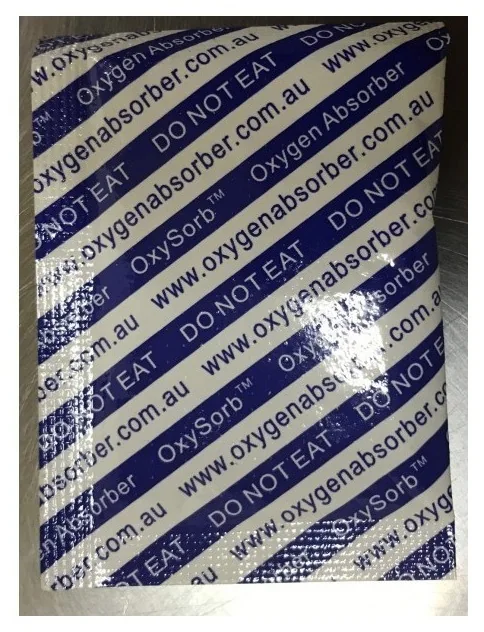
OxySorb sachets supplied by Wholesale Group are offered from 20 cc through to 2000 cc, including 20, 30, 50, 100, 200, 300, 400, 500, 1000 and 2000 cc sizes. The main oxygen absorber page lists the core range and stresses that a chart cannot, by itself, calculate the correctly sized absorber for every pack. For a commercial or unusual pack, ask Wholesale Group for technical sizing support or use the consultation services.
Match the sachet to residual air, then confirm
Start with the free air left after the product is in the pack — the headspace, plus air trapped among grains, pasta or other loose pieces. Dense, well-filled packs need less capacity than bulky, loosely filled ones of the same bag size. A vacuum step can reduce starting air, but only if the film remains a genuine oxygen barrier once sealed.
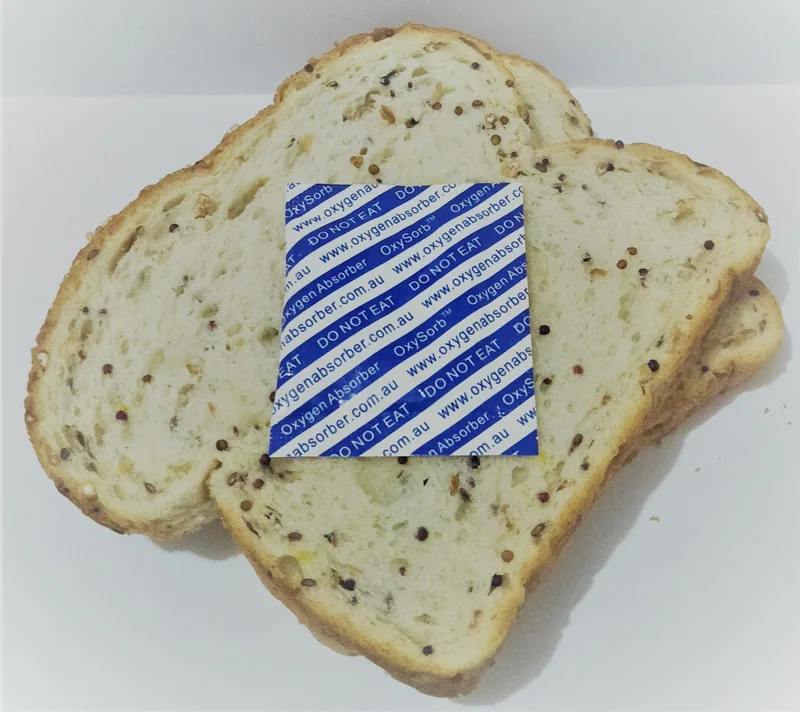
Then look at the food. Very dry staples in Mylar or jars are the usual home use. Nuts, coffee, milk powder, jerky and dry pet food are common commercial uses. Moist or semi-dry products need professional process validation before oxygen is removed; an undersized or oversized sachet will not fix an unsafe moisture level.
The table on the size chart page restates Wholesale Group’s published conservative starting volumes for each OxySorb size, from tiny 80 mL pouches up to about 8 litre barrier-lined containers. Use it as a first pass, then read the sizing notes before you pack a large batch.
Worked thinking, not a promise
Suppose you have a two-litre Mylar bag that will be reasonably full of rice. Two litres of container volume points, on the conservative rule, to about 500 cc of capacity — a single 500 cc sachet, or a 300 cc plus a 200 cc, for example. If the bag is only half filled, residual air is larger and you should size up. If you press most of the air out of a high-barrier pouch before sealing, residual air is smaller, but it is safer to keep the conservative margin than to cut it to the bone.

Small spice or tea pouches may only need 20 cc or 30 cc. Jars and small Mylar bags often sit in the 100 cc to 200 cc band. One- to two-litre packs often use 300 cc to 500 cc. Bulk bags and lined pails move into 1000 cc and 2000 cc territory. Those bands match the starting volumes published with the OxySorb listings.
Practical checks that matter more than the chart
- Use packaging that is actually an oxygen barrier, then seal it completely.
- Take sachets from a sealed master bag and close that bag again at once.
- Place the sachet and seal the pack in a short working window.
- Do not reuse a sachet, and do not treat the cc number as the volume of the container.
- If a dog or cat swallows a sachet, follow the on-pack warning and seek appropriate advice; Wholesale Group can be reached via its contact page.
When you are ready to order, shop oxygen absorbers at Wholesale Group or review the product category for related desiccants if moisture is part of the brief.
Shop oxygen absorbers at Wholesale Group